By David Saechao
As an educator, I often focus on identifying gaps in students’ knowledge and learning, as this allows me to tailor my teaching approach to help students overcome obstacles. In the context of preserving the Iu Mien language, however, I’ve observed that a major challenge lies in the second generation’s lack of proficiency.
Without an adequate level of proficiency, they tend to struggle passing the Iu Mien language on to their children, leading to further decline in fluency among the third generation. This generational gap is critical, as the ability to teach effectively requires an adequate understanding of the language.
Since the modern era, the Iu Mien language has experienced a significant decline in usage, largely due to the community’s exposure to dominant languages such as Mandarin, Vietnamese, Lao, Thai, English, and French, the world over. As Iu Mien people migrated or assimilated into societies where these dominant languages are prevalent, the second generation, in particular, has become less proficient in their native tongue. This generational shift has resulted in a wide gap in literacy, as younger Iu Mien individuals, often more fluent in the dominant languages, find it increasingly difficult to learn or pass on Iu Mien to their children. Consequently, the transmission of the language has weakened, making it harder to preserve cultural heritage and maintain linguistic continuity within the community.
The literacy gap has created a cycle where younger generations lose the ability to speak, read, or write in Iu Mien, further eroding the language’s role in the community. With fewer native speakers proficient enough to teach, the preservation of Iu Mien culture through its language is at risk.
Efforts to preserve the Iu Mien language must address this gap by creating accessible learning resources, leveraging modern technology, and fostering intergenerational connections. By taking these steps, the global Iu Mien community can ensure that their language and culture continue to thrive for future generations.
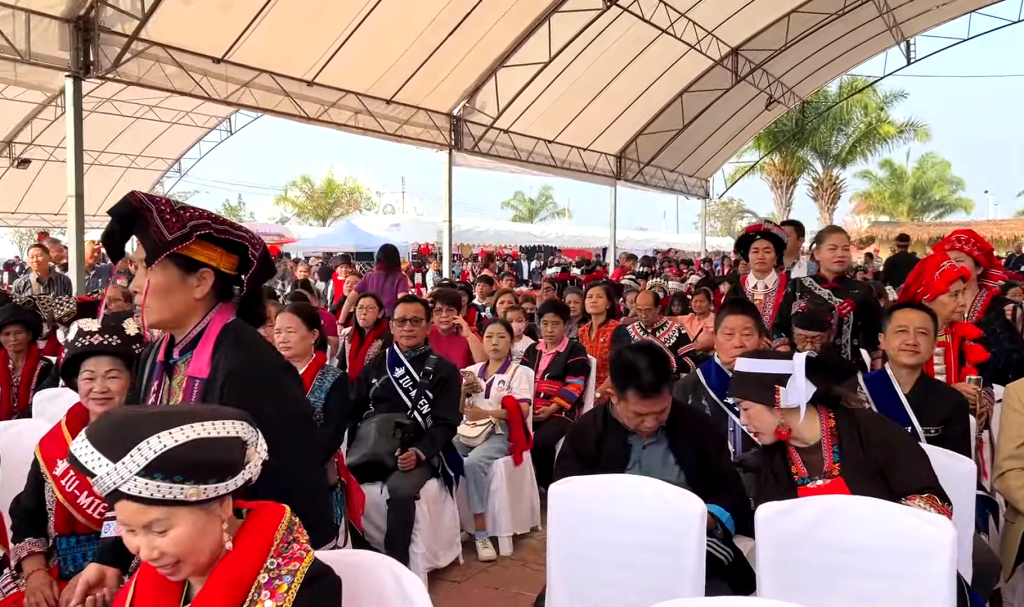
To help second-generation Iu Mien individuals use the Iu Mien language more frequently and effectively, immersive language programs and community-based initiatives are essential. Encouraging participation in Iu Mien language classes, both in-person and online, can strengthen language skills and build confidence. Community gatherings where Iu Mien is heavily spoken, such as cultural events or language exchange groups, can create an environment for practical use. Incorporating the language into daily life, such as speaking Iu Mien at home, watching Iu Mien media, or practicing with elders, can further enhance fluency. Additionally, creating digital resources like apps, language games, or social media groups can engage younger generations in a familiar format, making learning more accessible and appealing.
Through consistent exposure and active practice, second-generation Iu Mien can reach a proficiency level that allows them to confidently pass the language on to their children.

 Iu Mien Literacy Projects
Leave a comment